What is DOOH advertising, and why play centres work
What DOOH actually means
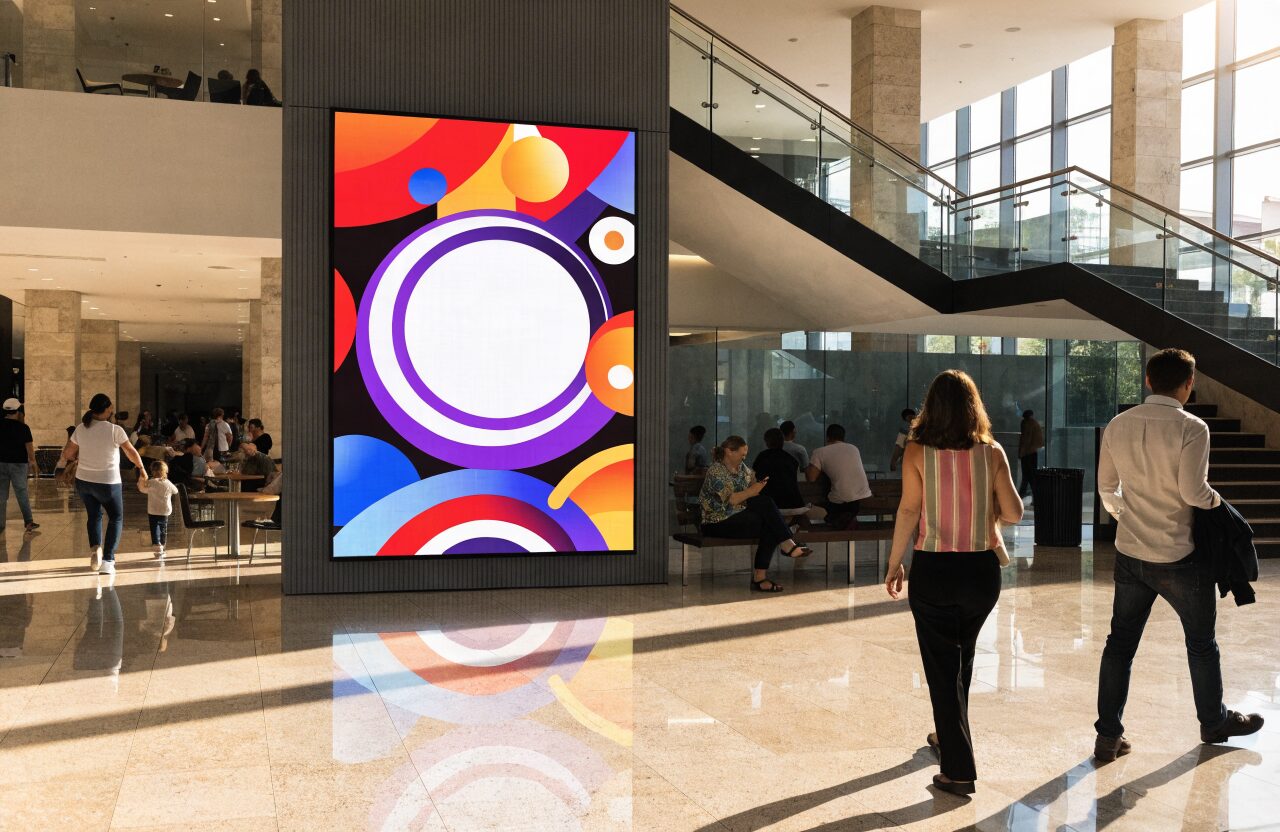
Out-of-home advertising is any advertising you see when you are out and about: billboards, bus stops, posters. DOOH is the digital version of that. Instead of a printed sheet, the advert runs on a screen, which means it can be changed remotely, scheduled by time of day, and rotated with other advertisers rather than occupying the space permanently.
The practical difference for an advertiser is flexibility. You are not committing to one printed image for three months. You can run a short campaign, swap the creative, or time your advert to the hours your customers are actually there.
How DOOH differs from online advertising
- It cannot be blocked or skipped. There is no ad blocker for a screen on a wall, and no skip button after five seconds.
- It is shared, not private. A family watches together, so an advert can reach the parent and the child at the same moment.
- It is not competing with a feed. Online, your advert sits between messages from friends. On a venue screen, it is the thing on the screen.
- It builds trust by association. Appearing inside a venue families already like transfers some of that goodwill to your brand.
Why dwell time is the number that matters
Most DOOH is measured in passing glances. A roadside screen might be seen for two seconds by a driver at 30mph. A screen in a shop window catches someone walking past. The impression is real, but it is brief and it happens once.
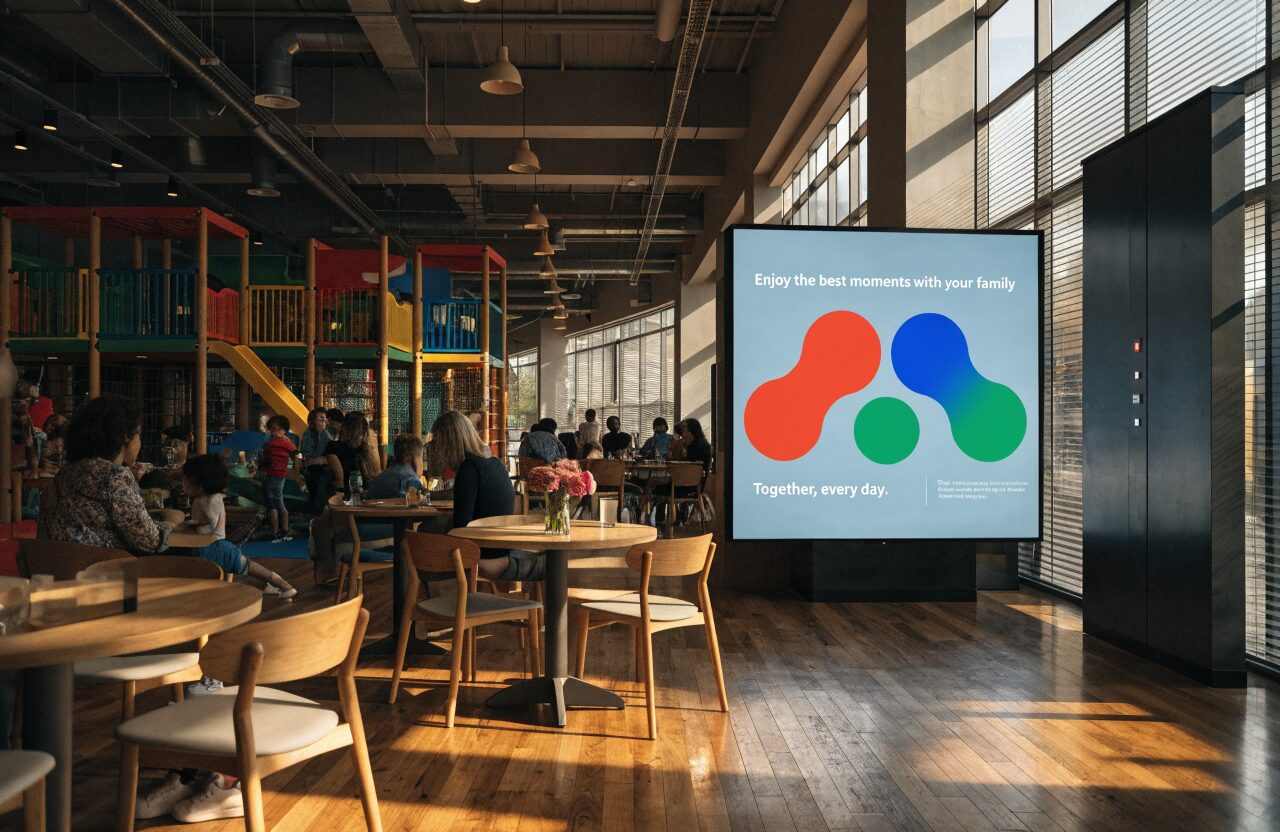
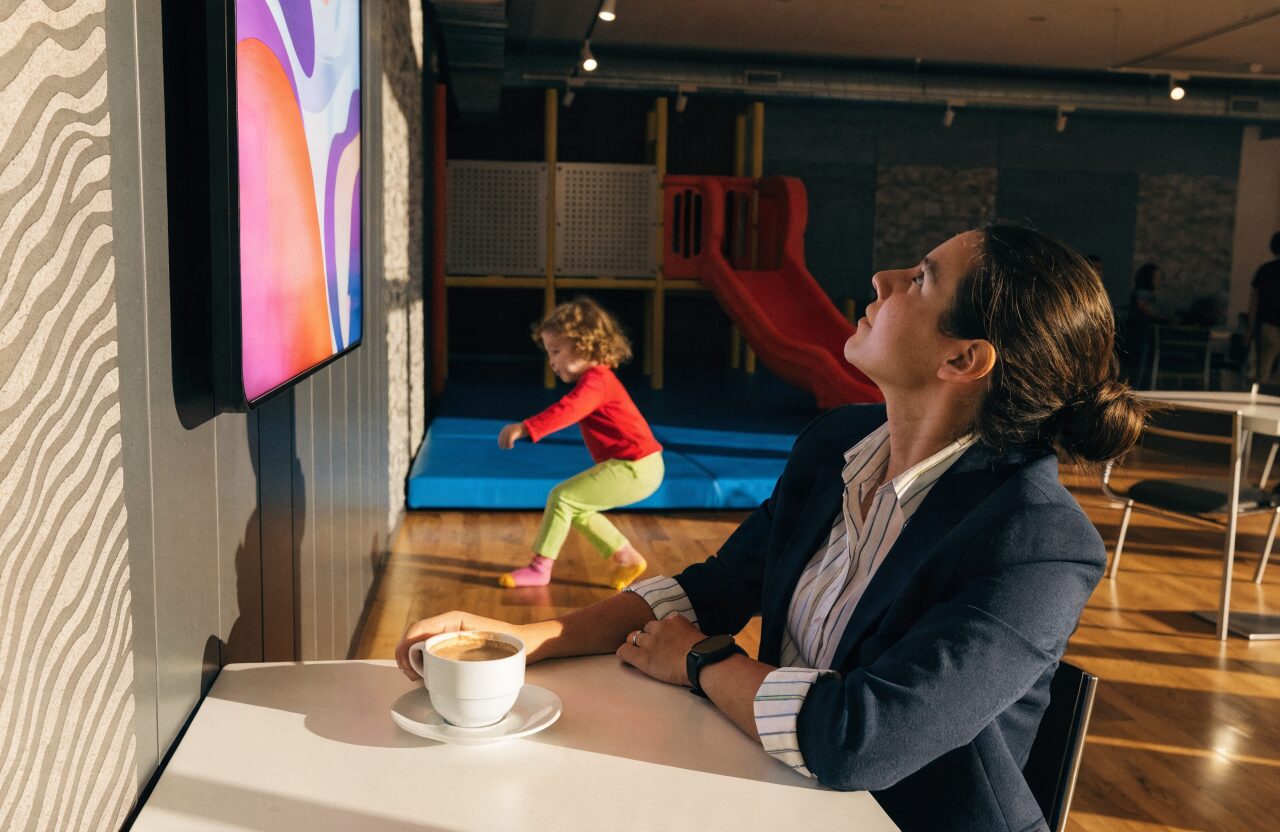
Play centres invert that. A family arrives, buys a session, and stays. Parents sit down, often with a coffee, while their children play. That is a long stretch of low-stimulation waiting time in a room where your advert is one of the few things to look at. The same advert is seen several times across the visit, which is what actually makes a brand stick.
Why family venues are a strong DOOH environment
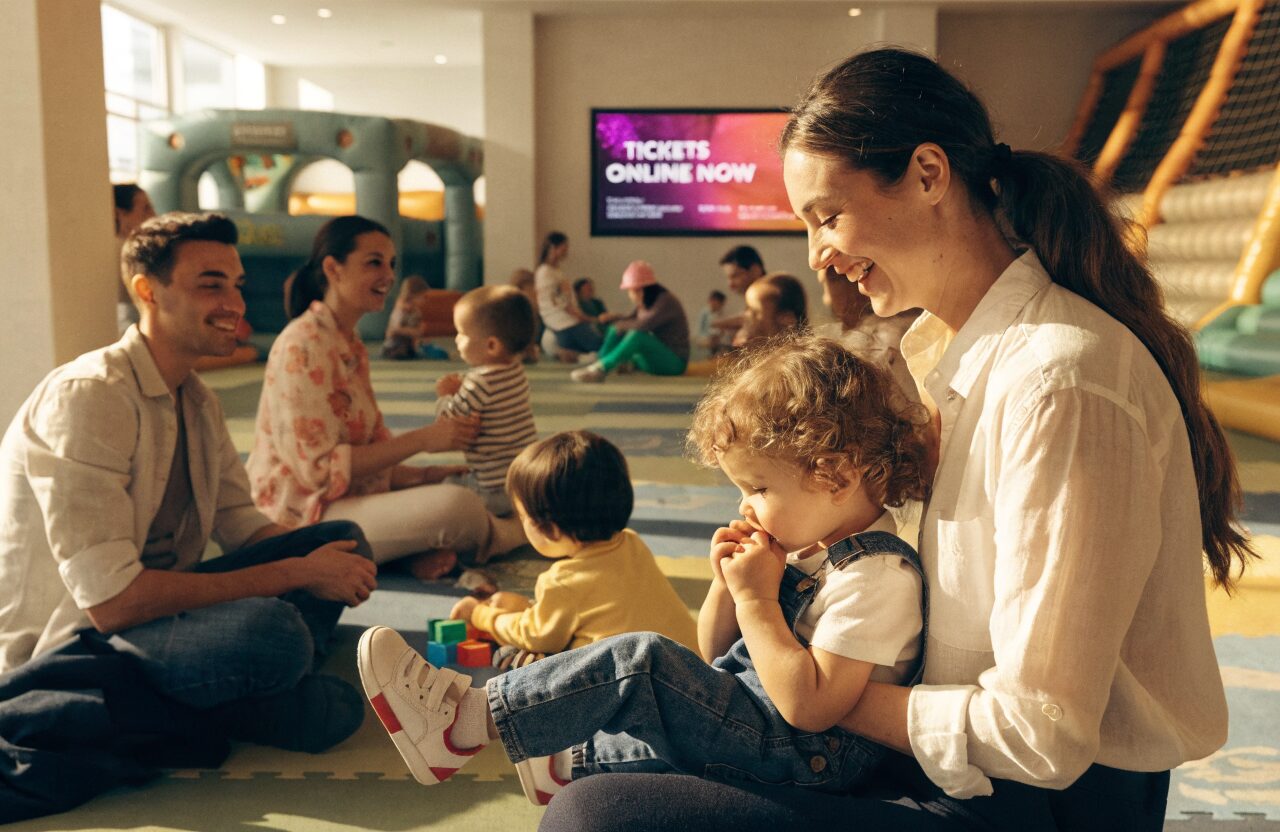
Beyond dwell time, three things make play centres unusual. The audience is verified: these are people who drove to a venue with children and paid to get in, not a demographic guess. The mood is positive, because nobody is at a play centre reluctantly. And the buyer and the influencer are both present, which is rare in any medium.
For a fuller comparison against paid social, see family venue advertising vs Facebook ads.
What a DOOH campaign involves
You choose the venues and dates, supply artwork to spec, and your advert goes into the screen loop. Our artwork specifications cover formats and deadlines, and we can help with the creative if you do not have it. Every campaign ends with a proof-of-play report showing when and how often your advert ran, so you can see exactly what you paid for.
Costs depend on venues, formats and length. See how much it costs to advertise in a play centre for guide ranges.
Keep reading
Want your brand on the screens?
Request the rate card and we'll send pricing and the full reach breakdown.
Request a rate card →